
C
CONSNECTLtd.
Loading
Get the latest construction industry insights and platform updates delivered to your inbox.
© 2026 Consnect. All rights reserved.
Prime Minister Abiy Ahmed has officially launched the construction of the Bishoftu International Airport, a transformative $12.5 billion project set to become Africa's largest aviation hub. Located 45km from Addis Ababa, the "Mega Airport City" will eventually handle 110 million passengers annually—nearly five times the capacity of the current Bole International Airport. Designed by Zaha Hadid Architects and a global consortium, the first phase is fast-tracked for 2030, positioning Ethiopia as the undisputed logistical heart of the continent.
Redempta
3 months ago
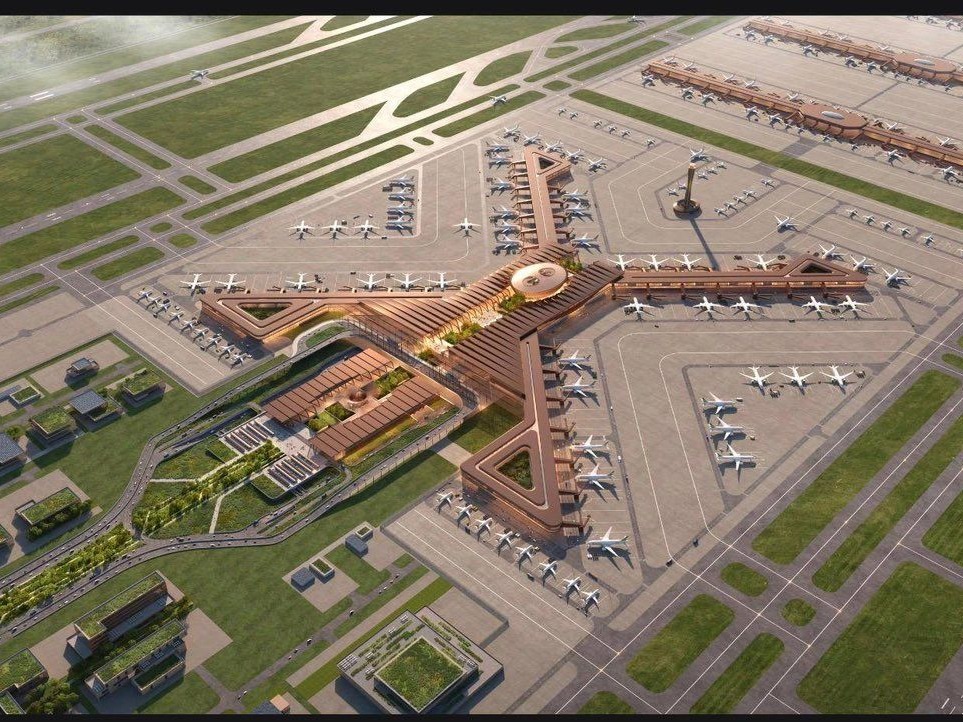
The groundbreaking ceremony in January 2026 marks the start of a new era for Ethiopian Airlines Group. As the existing Bole International Airport nears its maximum capacity of 25 million passengers, Bishoftu is designed to absorb the explosive growth of African air travel.
"This project stands as a milestone, underscoring our commitment to shaping the future of the African air transport industry," stated Mesfin Tasew, CEO of Ethiopian Airlines Group.
FeaturePhase I (2030)Full Build-Out (Post-2030)Passenger Capacity60 Million / Year110 Million / YearRunways2 Parallel (Code 4E)4 Parallel RunwaysAircraft Parking~100 Stands270 Aircraft StandsCargo CapacitySignificant expansion3.73 Million Tons / Year
The airport is not just about scale; it is an architectural masterpiece designed by Zaha Hadid Architects in partnership with Sidara (Dar Group) and Pascall+Watson.
The "Great Rift Valley" Inspiration: The terminal design features a central spine inspired by the local landscape, ensuring intuitive wayfinding for the 80% of passengers expected to be transiting through the hub.
Operational Edge: Located at an elevation 400m lower than Addis Ababa, the airport allows aircraft to carry more fuel and cargo with better takeoff performance.
Integrated Airport City: Beyond the terminals, the project includes a 350-room airside hotel, high-speed rail links to central Addis Ababa, and industrial zones.
The project is being financed with support from the African Development Bank (AfDB), ensuring that the aggressive timeline remains on track:
Groundbreaking: January 10, 2026
Main Infrastructure Works: Mid-2026
Phase I Completion: 2030 (Opening with 60M capacity)
The Economic Impact: The project is a key pillar of the African Continental Free Trade Area (AfCFTA), expected to create thousands of jobs for the local population and turn the Bishoftu region into a premier intercontinental business and tourism corridor.
Sign in to share your thoughts and engage with the community